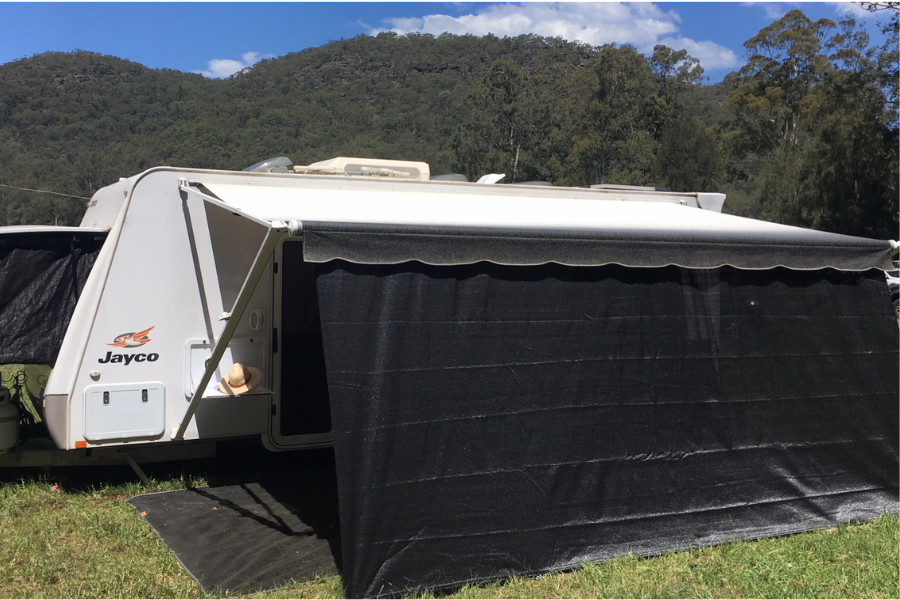
Caravan awnings are one of the best parts of setting up camp. They give you shade, shelter, extra living space and the perfect spot to enjoy a cuppa outdoors. But as any seasoned camper knows, awnings and wind don’t always get along. One strong gust is all it takes to damage fabric, bend poles or yank pegs out of the ground.
So, how much wind can a caravan awning actually take? The short answer: not as much as you might think. But with the right setup and a bit of wind awareness, you can keep your awning safe and enjoy more time relaxing outside your van.
This guide breaks down typical wind limits, the factors that influence awning stability and practical tips to help protect your setup on breezy days.
Every awning is different, but most standard caravan awnings can safely tolerate light to moderate winds. As the breeze strengthens, the risk of damage rises quickly.
Here’s a general guide:
Remember: it’s often the gusts, not the steady wind speed, that cause problems.
Not all awnings are built the same, and several factors can change their wind resistance. Understanding these helps you make better decisions at camp:
While you can’t control the weather, you can take steps to give your awning the best chance of staying safe:
Catching problems early can save you from costly repairs. Look out for:
If you notice any of these, it’s time to pack the awning away.
Some locations get reliably windy, so a few extra precautions help:
While caravan awnings are incredibly handy, they do have their limits. As a general rule, most awnings should be retracted in winds over 40 km/h, and always secured properly below that. With good setup, regular checks and a bit of wind awareness, you can enjoy your outdoor living space safely and avoid unexpected damage.
Want to protect your awning from wind damage? Campsmart has tie-down kits, anti-flap devices, support poles and accessories to help keep your setup sturdy and secure. Explore the range and keep your next campsite stress-free. If you are regularly camping in exposed areas, upgrading to fully enclosed caravan annexes provides a much more rigid structural footprint that shields the entire side of your van from unexpected squalls.


Add your favourites to cart

Select Afterpay at checkout

Log into or create your Afterpay account, with instant approval decision

Your purchase will be split into 4 payments, payable every 2 weeks
All you need to apply is to have a debit or credit card, to be over 18 years of age, and to be a resident of country offering Afterpay
Late fees and additional eligibility criteria apply. The first payment may be due at the time of purchase
For complete terms visit afterpay.com/terms